28 August 2012

Composer in Residence Curated Season 2012!

I'm very excited to introduce this autumn's Composer in Residence season, as curated by... moi! It's a series of concerts featuring old and new music, twisted and turned.

1) Ensemble Amorpha with special guest Michael Finnissy
    Thursday October 4th, 6.15pm

Ensemble Amorpha are an exciting chamber ensemble led by composer Luke Styles (currently Composer in Residence at Glyndebourne), who champion new music often across various disciplines. They will be bringing Michael Finnissy's 'Molly-House' to Handel House's various rooms, and Michael will be giving a talk about the piece, which samples Handel himself. Come along and wander through the rooms to hear this piece, as well as hear Ligeti's Solo Violin Sonata and work by Luke.

2) Consortium 5 plus You Are Wolf
     Thursday October 11th, 6.30pm
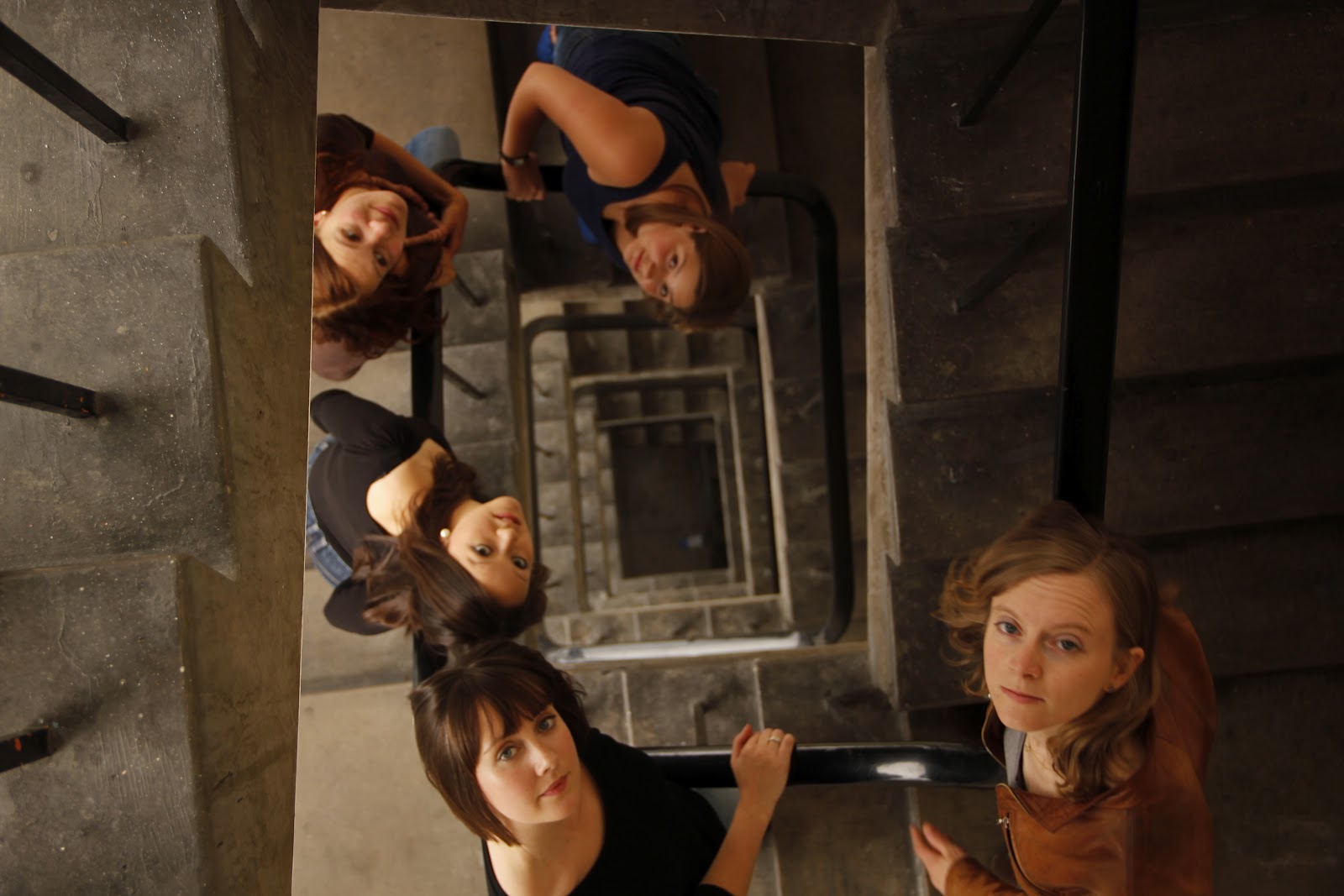
Effervescent recorder quintet Consortium 5 will be giving the premiere of my second commission for Handel House, a three-movement work called badluck birds a three movement work inspired by regional lore around three British birds. The work has 'open source' elements: the piece has been composed in layers, with the audience able to arrange various layers as they choose, creating new versions of the piece for each performance. Keep an eye out for the online game version of one movement, 'Scrietch'! 

Also featuring Kerry in her alt-folk guise, You Are Wolf, with some exclusive arrangements of her folksong project 'birdlore: murders, charms and murmurations' for YAW and C5.

3) Alasdair Roberts
     Thursday October 18th, 6.30pm

Don't miss the brilliant opportunity to see renowned Scottish folk singer/songwriter in the hushed and intimate performance room of the Georgian townhouse where Handel lived and worked. A totally unique folk gig!

Alasdair Roberts is a much-admired singer and guitarist immersed in the traditional song and balladry of the British Isles. His starkly beautiful renditions of centuries-old songs are complemented by self-penned material

 dense with dark wordplay and mythological references. He is an avid collaborator, having created music with the likes of Will Oldham, Emily Portman, Jackie Oates, Lisa Knapp and the poet Robin Robertson.


4) juice
    Sunday October 28th, 3pm

I sing in the experimental (and award-winning!) vocal trio juice, and we'll be returning to Handel House for an hour of brain-tingling vocal fabulousness! Featuring the London premiere of Lucy Mulgan's cheeky work '7 Sins'.


All concerts last an hour. Tickets are £9/5 and can be booked on 020 7399 1953. I really hope to see you there!

17 July 2012

badluck birds! Part 1

I've been working over several months on my second commission for Handel House, for the brilliant recorder ensemble Consortium 5, who perform a mixture of early music and pioneering new commissions.

The piece is entitled badluck birds; it forms another part of my current musical output using birds in some way - my current obsession! This year I've already written a set of 8 songs based on British birds in folklore for my folk project, You Are Wolf, which exists in its original version for me on vocals, loop station and various other bits and bobs plus Andy my husband on bass guitar, and also in a more experimental-classical incarnation for me plus string quartet and clarinet. You can find out more about that here! I also wrote a piece for the piano duo, duoDorT, with loop station and me as a speaker, at Aldeburgh last year, which took birds as a theme. This commission explores the lore of birds again, but without voices: I bought a beautiful secondhand book, 'All The Birds Of the Air' by Francesca Greenoak, which details the regional names, lore and literature of birds in the UK, and chose three who were sometimes thought to bring bad luck as my subjects to use as inspiration for three separate movements.

The first is Scribblie, a regional word for a yellowhammer; the second Bog-Drum, for the bittern; and the third is Scrietch, for the mistle-thrush. The high concept for this piece was to break down the barriers between composer and audience, and create a flexible piece of music that could be re-arranged by the public. I'm really interested in loops and layers as a performer, and particularly in how to make these continue to be interesting, and not predictable building blocks. For the first two movements, I wrote linear material for all five recorders in sections, imagining at any one time that any combination of the players, from solo to all five, might be happening. The idea will be that an audience can choose, before the gig, which of the performers will be playing in each section.

Scrietch has turned into an altogether different (flying) beast. I am developing, with the help of a wonderful web-maker, Vincent Van Uffelen, and a filmmaker, Pete Gomes, a website where visitors can really make their own version of the piece, which exists only as 51 fragments of sound! Online arrangers will be able to watch videos of the players individually performing their 10 or so bits of material, and then pull a track version down onto a timeline, which will sync to the nearest second. They can freely arrange this material however they like.

We've so far recorded the audio up at Sound Solution in Hackney, and yesterday filmed at Handel House, with the girls looking beautiful and poised whilst being absolute synchronisation demons and playing along to the existing audio perfectly. Next time I blog about this I'll be introducing you to the website itself... excitement!


30 April 2012

Folk, Mini-Operas, Cries of London

I had a lovely day trying out something new with young musicians from the RNIB; I often don my folk hat as a performer these days, but haven’t really led workshops using much traditional music, so this was the perfect opportunity to get stuck into some fresh songs and approaches. We co-arranged a beautiful vocal version of The Unthanks’ Newcastle Lullaby (I insisted upon pronouncing this in the Northumbrian fashion, naturally…) and then worked on arranging Jamie Woon’s take on Wayfarin’ Stranger. This was transformed from Jamie’s own loop vocal arrangement into a version for an ensemble including voices, percussion, recorders, flute, double bass, ‘cello and harpsichord. Brilliant! In the afternoon, the group divided up to have a go at arranging two London-based folk songs, and created wonderful fresh sounds including unusual seascapes for these traditional numbers. The performance to parents at the end of the day was great, and Sally from the RNIB said she would have thought it was being performed by adults if she was just listening. That’s good enough for me!

St Saviour’s finished off their mini-opera about the battle for Land and Sea in some style, with an afternoon filming a concert version of the music and then some action scenes that Darren, our cameraman, will drop in. Naturally, most of the class, when asked what they had enjoyed most about the project, was filming the fight scene; but I like to think they also did very well writing melismas on glockenspiels for our fabulous visiting baritone Bradley, instinctively singing recitative-style, and creating a rip-roaring story way better than some operas can boast. I’m looking forward to seeing the results!

Back to some more customary workshops with four classes of Year 5 boys from King’s College School in Wimbledon, where they have happily created musical collages in voices and percussion inspired by street sounds that might (or might not!) have been around in Handel’s day. Here’s an example of a choral/harpsichord version!


And here's a version with added percussion to evoke church bells, footsteps, horses' hooves and carriage wheels:

23 March 2012

Mini-Opera-writing (with swordfish sword-fights)

This term I have been working with primary school children at St Saviour's Primary School in genteel Warwick Ave on Handel House's annual opera project. St Saviour's is my old stomping ground (my first job was teaching music there after my PhD), so it's been super-lovely to revisit, and to work with a Year 5 class that were about half the size when I last saw them. Amazingly, I remembered most of their names!

This year, the London Handel Festival are performing the little-known Riccardo Primo (even Handel wasn't that keen on it, and happily re-used about eight arias in later works). So we took this as our starting point and learnt a little about the plot (the usual mix of revenge, despair, fighting, love, etc) through a hilarious freeze-framing exercise. We also brought in a lovely singer from the Royal College, Bradley, who gave them a blast of one of baddie Isacio's arias. I was impressed that the class of 9/10 year-olds were pretty knowledgeable about opera already, from being able to describe that a recitative was a bit like musical talking, to how opera singers sing more in head than chest voice. Blimey!

Since then we've been working on our own mini-opera, featuring Bradley and the class, and using the playground's fabulous jungle/sea murals as inspiration. Cue lots of quite amazing ideas including a trained killer shark chorus, shipwrecks and fights with swordfish instead of swords. More professional operas should feature trained killer sharks! I took these ideas away and came up with a synopsis and simple libretto. This week the Year 5s composed, instinctively and rather brilliantly, I might say, a recitative for Bradley - or should I say, Bradley The Tigerclaw, King of the Land; they were tickled to hear it sung dramatically by him the next day. They also worked on some atmospheric, textural shipwreck music and a chorus, along with body percussion riffs, to accompany the fight scene.

I've now got to take their melismatic ideas - composed in small groups on glockenspiel - and use them in Bradley's aria. Then we'll work on some drama and get them decorating their sea or land animal masks. Can't wait!

15 November 2011

Graininess and Sheen


Graininess and Sheen by Kerry Andrew Composer

I have completed my first commission for Handel House Museum! I wanted to bring together some of my recent musical interests - electronica, spoken word, improvisation in composition - and push myself into a slightly new creative direction, but also write something that suited Handel House. I was introduced to Ewan MacColl and Peggy Seeger's Radio Ballads by the artist Ruth Ewan on a previous project this year for Art on the Underground (which you can hear here!); their bare-bones presentation of recorded interviews with people about their lives in Britain in the '50s and '60s had a real impact on me.

I decided to interview some of the volunteers who humbly staff the Museum during its opening hours, and asked them to talk about their personal responses to the House. I then spent some time on a quieter day (well, as quiet as it can be with 3 lanes of traffic outside...) and recorded myself improvising on the three keyboard instruments, which live in different rooms. This included lots of percussion sounds and string-playing on the two harpsichords and the cutely out-of-tune spinet. I also had to record the famous creaking floorboards. Taking all this raw material home, I chopped, sifted, and arranged this into a 9-minute track, adding only a few layers of my voice in addition.

I see this piece, called Graininess and Sheen after a quote from one of the volunteers, as a portrait of the House by the House, with the three keyboard instruments in a trio with each other from the different rooms of the building... Hope you like it!

The volunteers interviewed were:
Steve Murray
Roger Sydenham
Annette Viner
Jenny Atkinson
Jane Whitworth
Guilherme Feistauer
Reiko Fujiike-Stilling
Fabrizio Bignlino
John Gordingly

31 October 2011

Composer in Residence Season: Report!

This autumn I've hugely enjoyed curating my 4-part Composer in Residence season at Handel House. It's a lovely addition to workshop-leading and composing and working with other musicians in this way is always something I've loved. What I thought was really successful about this season was how the artists really responded to the atmosphere and character of the House.


First up I invited composer/artist Claudia Molitor to bring her brand of immersive, tactile work to the House. Along with pianist Sarah Nicholls, she installed all sorts of interactive, thought-provoking pieces all inspired by the idea of touch in music (using Handel's blindness as a starting point), from video works to a triptych based around a paper cut-out score; embroidered notation - white cotton on white linen so you had to feel the score rather than read it; music created by eating (popping candy naturally being the highlight); and an exploration of the weight needed to play the main harpsichord, demonstrated through a lovely, slow-burning performance by Sarah and a load of pound coins! Most gorgeous to look at was Handel's bed, festooned with a ribboning score, as if Handel was reclining there with all his musical ideas spilling out uncontrollably.


A week later, improvising demon Leon Michener, along with jazz bassist Olie Brice and wonderful singer Seaming To brought a sense of hushed spookiness to the House, focusing on Baroque-inspired improvisations, ghostly songs and tiny sounds wrought from the harpischord, Leon's wurlitzer and clavichord, sometimes played with an e-bow. Seaming, who possessed a voice capable of whispery flutterings and near-operatic swells, was clad in a stunning high-fashion take on gothic Victoriana, and manipulated Leon's homemade magic lantern music box to project abstract cut-outs suggesting insects and animals onto the wooden shutters. 
The RNIB's talented young composers whom I'd worked with in July returned to hear soprano Juliet Fraser perform their solo songs - see my previous blog for details but here's a photo of some of us!
Finally, a heart-warming folk gig sent us rosy-cheeked into the autumn night. Olivia Chaney, a musician with an assured voice reminiscent of Sandy Denny and something of a Waterhouse's Ophelia about her, sang mostly original songs self-accompanied by muted harpischord (for a lute-ish feel), Indian harmonium or guitar. Sam Lee, who had to dash off on his bicycle to present his own folk series up the road afterwards, had a similarly off-kilter edge with his travellers' songs backed by violin, 'cello, Japanese koto and shruti box. Sam has a wonderful way with words and demonstrated a love of the roots of his songs and a respect for those he learnt them from; he told us he thrived off bringing these rough-edged songs into our intimate, but formal, space. It strikes me that Handel's rehearsal room is the perfect setting for some more acoustic folk...

30 September 2011

Composer in Residence Season!

I'm very excited about October's season of concerts curated by myself, bringing all sorts of fascinating and diverse music to the House:


1) Touch and The Barely Audible: October 13th, 6.30pm 
Many of us can empathise with Beethoven’s eventual deafness. What could be more devastating for someone who has been immersed in the sonic all their lives to find themselves unable to dwell in that world any longer? There is a general awareness of Beethoven’s deafness, even amongst people who have never heard his music. Yet few, even those who listen to Handel’s music, know that he went blind in later life.

What would it mean 
for a composer to lose their vision? Composers not only immerse themselves in a world of sound, their work is also intensely visual. In writing notation we dwell in a predominantly visual experience, one which directly informs the compositional process, in a similar way that drawing functions for artists.

Touch and the Barely Audible, part performance, part installation, will explore music and sound as a tactile, sculptural and material experience with innovative composer and director of Soundwaves Festival, Claudia Molitor.

2) Perilous Toye: October 20th, 6.30pm
New compositions for solo amplified clavichord and ensemble with Olie Brice on Contrabass, Leon Michener on Clavichord and electronics, and ‘mystery guest’ vocalist. Projections from the visual music box by Pianoscope.

The clavichord is one of the most early and expressive of keyboard instruments, and one that the young Handel was very attached to, often stealing away at night to practice in secret. In this recital his instrument is taken out of it's normal acoustic setting and subjected to various means of sound generation and styles of playing, forming the basis for a suite of compositions that move through free Jazz, Hendrixian riffs, Baroque partimenti, Classical composition, and folk music. 


3) Juliet Fraser, October 23rd, 3pm
Soprano Juliet Fraser performs works written especially for Handel’s rehearsal room during the annual week long summer school for young people at Handel House Museum with the Royal National Institute for Blind People. Expect diverse pieces exploring everything from Shakespeare and Wordsworth to ping-pong and the phone-hacking crisis!


4) Sam Lee and Olivia Chaney, October 27th, 6.30pm
Two stunning folk/alt-folk artists for the price of one.

Sam Lee, folk singer, promoter and animateur, was the 2011 Arts Foundation Award winner and is fast becoming accepted as one of the new pioneers defining the sound, sight and texture of contemporary folksong. Likewise his live band carves an acoustic with their homemade and mongrelised instrumentation and unconventional arrangements that challenge any preconceptions of what ʻtraditionʼ should sounds like.

Olivia Chaney is an exceptional songwriter and gifted virtuoso, conjuring original songs from an Indian harmonium and steel-string guitar. Expect to be charmed, moved and entertained by a performer and musician of unusual depth and passion.


All tickets are £9/5, concerts last an hour, and you should book in advance to ensure entry by calling 02073991953 (there's no online booking). I really hope to see some of you there for what promises to be a fabulous season.